Light Commercial HVAC for Offices, Retail and Restaurants
HVAC for offices, shops, restaurants and churches
Light commercial is the middle ground between a house and a high-rise: a dental office, a strip center storefront, a church hall, a restaurant or a small warehouse, usually cooled by rooftop package units or split systems instead of a central plant. That is the equipment we know best on the commercial side. Each building type has its own problems, from restaurant kitchens that overload the dining room unit to offices where tenants fight over one thermostat, and we plan service around how the space is used.
Why choose Blue Star
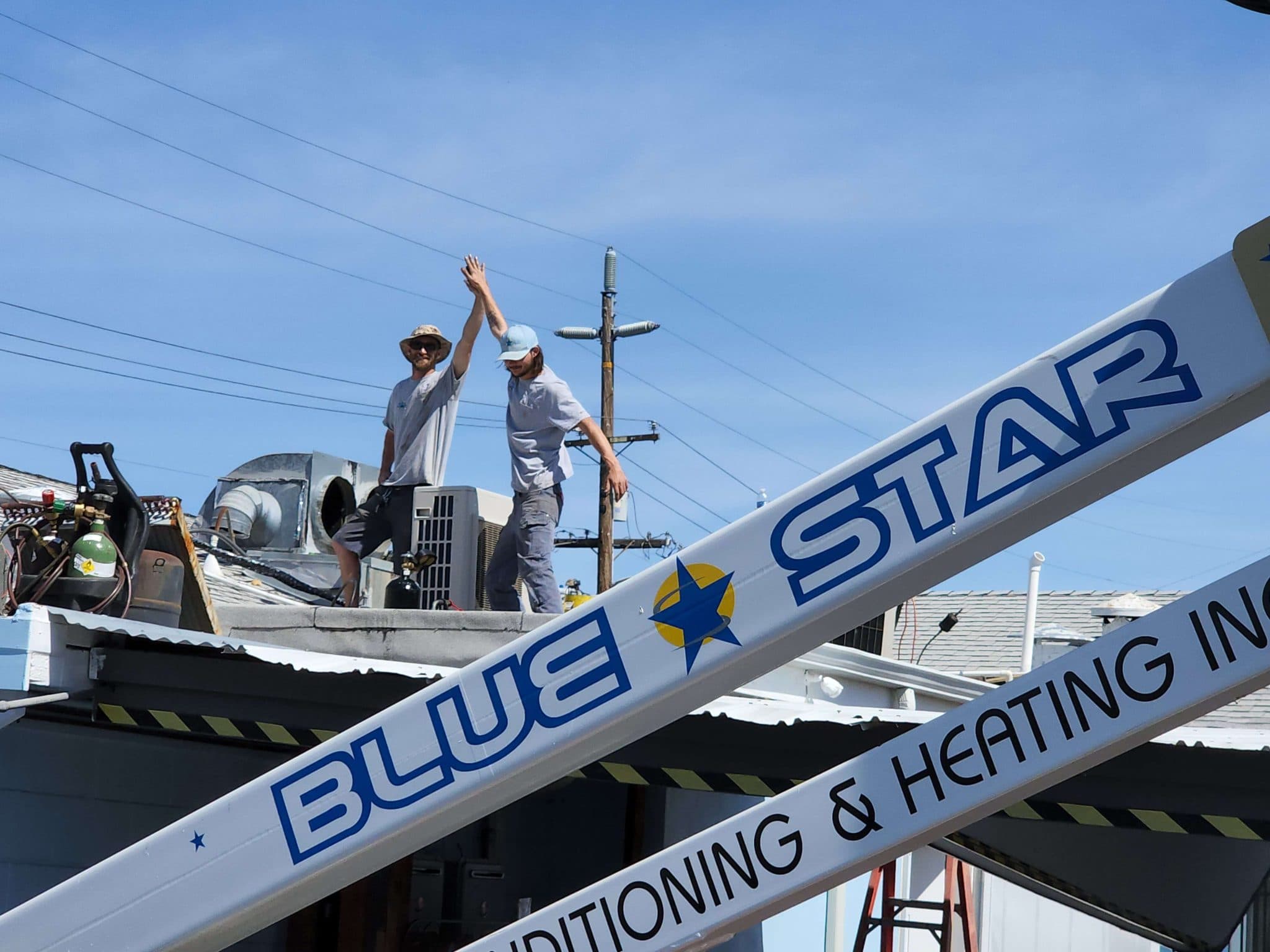
We work for homeowners, apartment owners and businesses, so we bring a residential contractor's habits to commercial work: clear explanations, prices before work starts, and cleanup when we leave. Small business owners rarely have a facilities department, and they shouldn't need one to get their heating and air handled. We keep it simple, with one phone number, a technician who explains the options in plain terms, and payment by cash, check or credit card.
- Package units and splits
- Kitchen and dining heat loads
- Office zoning and thermostats
- Medical and dental offices
- Schedules for church halls
- Small warehouse heating
Where we work
Light commercial buildings make up much of the business base along our main corridors: medical offices near Kaiser Antioch and Sutter Delta, the Lone Tree Way and Sand Creek Rd retail strips, Railroad Ave restaurants in Old Town Pittsburg, and neighborhood centers on Discovery Bay Blvd and at Oakley's Emerson Ranch. In Central County, Concord and Walnut Creek have dense office and retail space along Willow Pass Rd and Ygnacio Valley Rd. Marina businesses on Bethel Island see more corrosion on outdoor equipment.
Major corridors
- SR-4
- Deer Valley Rd
- Lone Tree Way
- Railroad Ave
- Discovery Bay Blvd
- Bethel Island Rd
- Willow Pass Rd
- Ygnacio Valley Rd
We do this across our service area:
Each link opens that town's heating and air page.
4.9 stars on Google
Read more reviewsColton was great. He found the problem right away and did a temporary fix to get my a/c running until he could get the right part ordered. He also made sure every inside was working well.
Questions we hear
What counts as light commercial HVAC?
Generally, buildings served by rooftop package units or split systems rather than chillers and boilers: offices, retail stores, restaurants, medical and dental suites, churches, and small warehouses or shops. The equipment is similar to large residential systems but runs longer hours, often uses three-phase power and economizers, and comes with more code and permit requirements. That is the commercial work we focus on.
Why is our restaurant dining room always hot?
Kitchens throw off a lot of heat, and the exhaust hood pulls conditioned air out of the building. If makeup air isn't balanced, the hood draws hot outside air in through doors and gaps, and the dining room unit can't keep up. An undersized unit, a dirty coil or a thermostat in the wrong spot can add to it. We look at the whole space, not just the rooftop unit, before recommending a fix.
Do you handle commercial refrigeration or kitchen hood cleaning?
No. We work on the heating, cooling and ventilation side of a restaurant or store, including rooftop units, split systems and the ductwork that serves them. Walk-in coolers, reach-in refrigeration and ice machines go to a refrigeration contractor, and kitchen hood and grease duct cleaning goes to a hood cleaning service. If you need either, we are glad to point you to the right trade.
Can one thermostat handle a small office with several rooms?
It can, but it often causes complaints. The thermostat reads one room, so offices on the sunny side, or with more equipment and people, run warmer than the room it sits in. Depending on the building, options include moving the thermostat, rebalancing the ducts, adding a zone damper system, or adding a ductless head for a problem room like a server closet. We recommend the simplest fix that solves it.
How should we plan for replacing older equipment?
Start with a list of every unit with its age, size and condition. Rooftop units in our climate commonly last around 15 to 20 years, less without maintenance. With that list, you can replace the worst units first, plan around lease renewals or slow seasons, and avoid emergency replacements in July when equipment and crews are hardest to get. We can walk your building and put the list together.
Related services
All servicesBlue Star Heating & Air is just a call away!
Run a shop, office, restaurant or church in Contra Costa? Call (925) 584-2428, tell us about the building, and we will recommend repair, maintenance or replacement in plain terms.